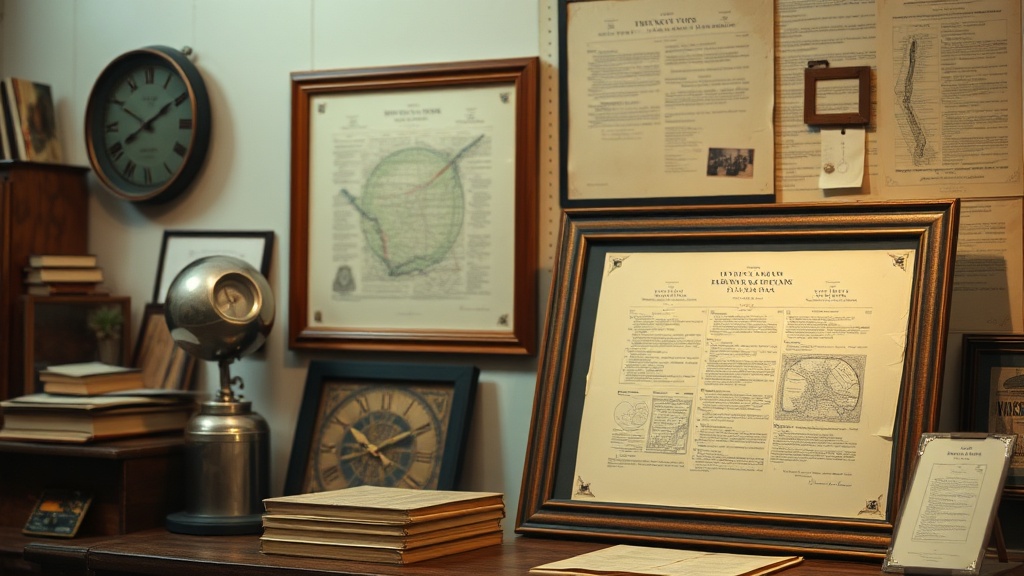
Arranging and Framing Vintage Documents Safely

Protecting Paper and Ink Through Proper Framing
Imagine you’ve just acquired a mid-century transit permit or a beautifully weathered 1950s passport from a small European nation. It sits on your desk, a physical piece of history, but you want to do more than just keep it in a drawer. You want to display it. However, the moment you consider putting it behind glass, a new set of problems arises. Standard framing techniques—the kind you find at a local craft store—can actually accelerate the decay of your collection. If you use acidic mats or leave the document touching the glass, you’re setting a trap for mold, moisture, and permanent discoloration. This guide covers the specific materials and techniques required to display paper-based travel ephemera without causing irreversible damage.
Displaying these items is about balancing aesthetics with preservation. Most collectors want their pieces to be visible, but visibility often comes at a cost. When paper meets a direct heat source or trapped moisture, the ink can fade and the fibers can become brittle. We’ll look at how to choose the right frames, how to avoid common mistakes, and how to ensure your collection stays vibrant for years.
What materials should I use for framing paper documents?
The biggest mistake people make is assuming any frame is a safe frame. Most commercial frames use wood or cardboard that contains lignin—a natural organic polymer that, as it breaks down, creates acid. This acid eventually turns your beautiful document yellow and brittle. When you're shopping, you must look for specific keywords that ensure your items remain safe.
- Acid-free Matting: Always look for "archival quality" or "acid-free" labels. These mats won't leach chemicals into the paper.
- Museum Glass: Standard glass provides zero protection against UV rays. Museum glass (or UV-protective acrylic) filters out the light that causes ink to fade.
- Linen Backing: If you have a very fragile document, you might consider professional linen backing, which provides structural support without the need for harsh adhesives.