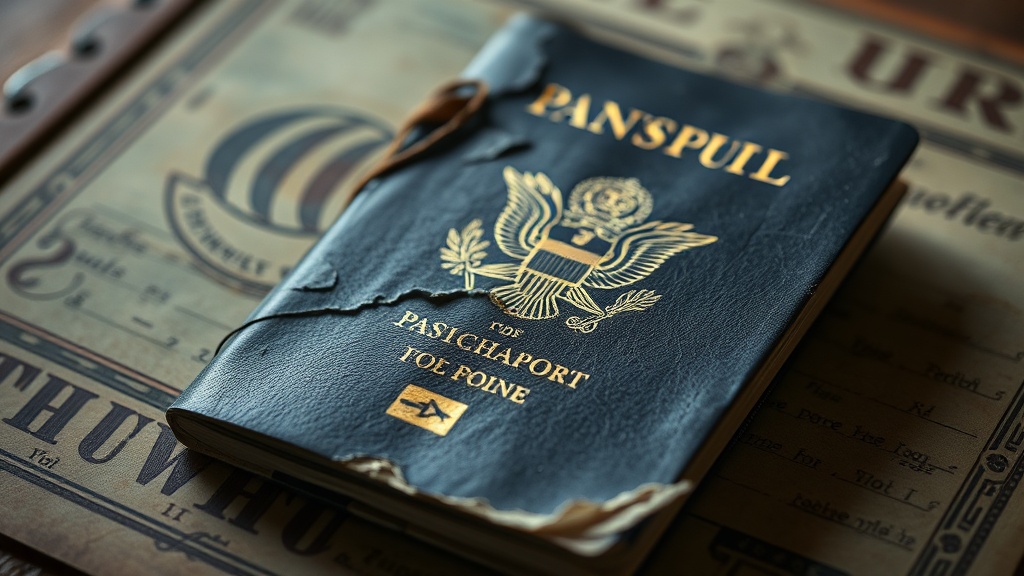
Can You Restore a Damaged Vintage Passport Without Ruining Its Value?

Most collectors believe that any damage to a vintage passport automatically destroys its worth—and that aggressive restoration will bring it back. Both assumptions are dead wrong. In the world of historical travel documents, the relationship between condition and value is far more nuanced than "perfect equals expensive." Understanding when to intervene, when to step back, and how to prevent deterioration in the first place can mean the difference between preserving a valuable artifact and destroying it.
When Does "Damage" Actually Add Character?
Not all wear indicates poor condition. A passport bearing immigration stamps from multiple countries, worn edges from being carried in a pocket through wartime, or water stains from a transatlantic crossing—these aren't defects. They're evidence. The collector community increasingly recognizes that documents with what professionals call "history of use" often command higher prices than pristine examples that sat unused in a drawer.
The key distinction lies between damage that tells a story and deterioration that obscures it. A torn page with a visible repair from the 1950s adds interest. Mold spreading across a visa stamp destroys information. A coffee ring from a café in 1930s Paris becomes a conversation piece; active foxing (those reddish-brown spots caused by acid migration) threatens the paper's longevity. Collectors must learn to evaluate whether wear contributes to or detracts from the historical narrative the document presents.
Market trends support this nuanced view. At recent Stack's Bowers auctions, well-traveled passports with clear provenance and "honest wear" consistently outperformed unused specimens in equivalent physical condition. Buyers want stories—they want to imagine the hands that carried these documents, the borders crossed, the lives lived. A passport that's never been stamped is like a book that's never been read. It's complete, sure, but where's the life in it?
Should You Attempt DIY Repairs on Vintage Paper?
Short answer: almost never. The urge to "fix" a torn corner or reattach a loose cover is understandable—nobody likes seeing something beautiful in distress. But vintage passports aren't craft projects. They're historical artifacts where every intervention leaves a trace, and not the good kind.
Common DIY disasters include using Scotch tape (which yellows and leaves permanent adhesive residue), ironing out creases (which can set stains and literally cook paper fibers), applying modern glue like Elmer's or Krazy Glue (which stains and becomes brittle), and "cleaning" with water or household chemicals (which can cause ink to bleed or paper to warp). I've seen $500 passports reduced to worthless scraps by well-meaning owners wielding supplies from the junk drawer.
Professional paper conservators spend years learning how to stabilize documents without altering their appearance. They use reversible materials—meaning future conservators can remove today's repairs without causing damage. They understand paper chemistry, adhesive properties, and the specific challenges of bound volumes. Their services aren't cheap (expect $150-$500 for minor stabilization, and significantly more for complex treatments), but neither is your collection. The American Institute for Conservation maintains a directory of qualified professionals—start there, not with a YouTube tutorial.
What Storage Methods Actually Prevent Deterioration?
Prevention beats restoration every time. The ideal storage environment for vintage passports combines stable temperature (65-70°F), moderate humidity (45-55%), minimal light exposure, and protection from air pollutants. But how you store documents matters as much as where.
Individual archival polyester sleeves (Mylar D or equivalent) provide excellent protection against handling damage and environmental contaminants while allowing visibility. Avoid PVC at all costs—the plasticizers off-gas and cause irreversible damage over time. For especially valuable or fragile items, consider custom archival boxes that provide structural support and buffer against humidity fluctuations. Never store passports in attics, basements, or near exterior walls where temperature and humidity swing dramatically.
Handling practices deserve attention too. Clean, dry hands—or better yet, cotton gloves—prevent oils from transferring to paper. Support the entire document when viewing, not just one edge. Don't crowd items on shelves where friction causes wear. And please—don't use rubber bands (they crack and fuse to paper), paper clips (they rust and tear), or Post-it notes (the adhesive migrates), all of which cause permanent damage that professional conservators will later have to painstakingly reverse.
How Do You Document Condition for Insurance and Resale?
Whether you're building a collection for pleasure or investment, documentation protects your interests. Photograph each passport from multiple angles—covers, interior pages, any damage or repairs. Include scale references and capture details like watermarks or security threads that authenticate age and origin. Good documentation helps with insurance claims, establishes provenance for future sales, and tracks any changes in condition over time.
Maintain a condition log describing wear, previous restoration, and provenance. The professional grading standards used for comics and trading cards offer useful frameworks for thinking about condition—even if formal third-party grading remains less common for passports than for coins or stamps. Documenting "problems" honestly (tears, stains, missing pages) builds trust with potential buyers and helps you avoid disputes later. Trying to hide damage almost always backfires.
For insurance purposes, work with a carrier specializing in collectibles—standard homeowner's policies often have inadequate coverage for paper items, with strict limits on "manuscripts" or "documents" that wouldn't cover a serious collection. Keep appraisals current (every 3-5 years for valuable pieces) and store backup documentation—including photographs—offsite or in cloud storage.
When Is Professional Conservation Actually Worth the Investment?
Consider professional intervention when damage threatens a document's structural integrity or when stabilization would significantly enhance display safety. A conservator can flatten documents safely using controlled humidity chambers, repair torn pages using Japanese tissue and wheat starch paste (both archival and reversible), stabilize flaking ink, and address active mold or insect damage. They can also advise on display options—like UV-filtering glass and proper matting—that balance visibility with preservation.
The decision often comes down to value—both monetary and historical. A common post-war passport with minor wear probably doesn't warrant conservation costs that might exceed the item's value. A 1920s League of Nations passport with unusual visa stamps, watermarks, or association with a notable traveler might justify significant investment in stabilization. Consult with a conservator for an assessment before committing to treatment; many offer examination services for a nominal fee that can be applied toward future work.
Remember: conservation aims to preserve, not to restore to "like new" condition. The best conservators leave evidence of age and use intact while stopping deterioration. If a conservator promises to make your 1940s passport look like it was issued yesterday, find someone else. That approach destroys the very authenticity that makes these documents valuable.
Collecting vintage passports connects us to individual lives lived through extraordinary times. The creases, stamps, and yes—even some stains—carry stories that pristine documents can't tell. Resist the urge to make everything look brand new. Instead, focus on stabilizing these fragile connections to the past so they survive for future generations to discover. Your collection isn't just about owning beautiful objects—it's about preserving history in all its imperfect, well-traveled glory. Treat these documents with the respect they deserve, and they'll continue revealing their secrets for decades to come.