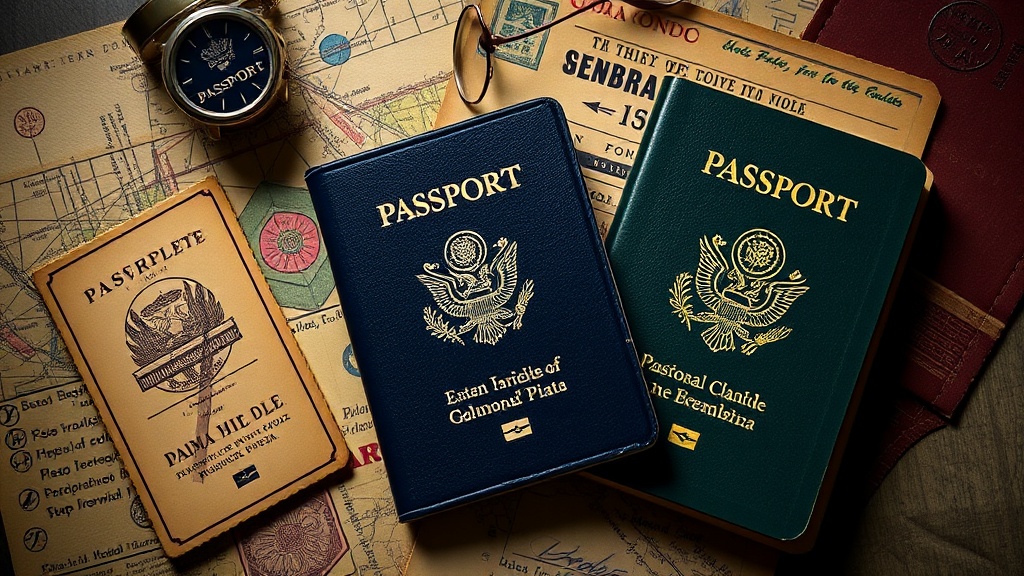
How to Shape a Vintage Passport Collection Around One Compelling Theme

Why Collect Thematically Instead of Grabbing Everything?
Have you ever stared at a growing stack of vintage passports and wondered why they feel disconnected—like interesting objects that don't quite talk to each other? Most collectors start by scooping up whatever catches their eye at flea markets or estate sales. That's fun at first. But after a dozen or so passports, the randomness starts to nag at you. A themed collection solves this. It gives you focus, tells a coherent story, and—practically speaking—helps you say "no" to pieces that don't fit. Your budget stretches further because you're not buying indiscriminately. Your display looks intentional. And when fellow collectors visit, they see a narrative, not just a pile of old documents.
Thematic collecting also deepens your expertise faster. When you're hunting passports from a specific era—say, the interwar period—you learn the subtle differences between German Weimar-era booklets and British Empire blue jackets. You start recognizing which visa stamps matter, which border crossings were common, and which anomalies to watch for. That depth makes you a sharper buyer. You'll spot underpriced gems that generalist sellers miss because they don't understand what makes a 1923 Hungarian passport with a Romanian transit stamp significant to someone tracing migration patterns across Eastern Europe.
Which Themes Actually Work for Vintage Passport Collections?
Not every theme sustains a collection long-term. You want something specific enough to be interesting but broad enough that you can actually find material. "World War II" is too vast—millions of passports circulated then. But "passports issued to Jewish refugees fleeing Europe through Lisbon in 1940-1942"? That's specific, historically significant, and hunt-able. Other solid themes include: passports from defunct nations (think Yugoslavia, Czechoslovakia, the Soviet Union), diplomatic passports from African nations during decolonization (1955-1970), or passports featuring specific visa stamps—like the rare Spanish Republican stamps from 1936-1939.
Some collectors focus on visual elements. One friend of mine only acquires passports with hand-painted portraits from the 1920s and 30s, when photography was expensive and some countries still allowed artistic renderings. Another collector I know tracks passports that document round-the-world journeys, following travelers through sequential stamps from San Francisco to Yokohama to Bombay to Marseille. These collections are captivating because they capture human movement during eras when travel was slower, riskier, and more deliberate. Your theme should genuinely fascinate you—you'll be living with it for years.
How Do You Research Passports Before Buying?
Impulse buying kills thematic collections. When you're building around a specific story—say, Cold War-era passports from non-aligned countries—you need to verify that each piece actually fits. Start with the basics: issue date, issuing authority, and the passport holder's documented travel. A 1962 Indian passport with visas from Yugoslavia and Egypt? That fits the non-aligned narrative perfectly. The same passport with only UK and US stamps? Less compelling for that specific collection (though possibly perfect for a different theme).
Learn to read the codes. Most vintage passports include handwritten or stamped notation about profession, marital status, and sometimes ethnicity or religion—markers that vary enormously by era and regime. The Passport Collector community maintains excellent archives of regional variations. For European documents, the Imperial War Museums research collections offer digitized passport samples from major conflicts. Cross-reference eBay listings or auction catalogs against these databases. If a seller claims a passport belonged to a specific notable figure, demand provenance documentation. Thematic collections lose credibility if you accidentally display a forgery or misattribute a document's significance.
Where Should You Hunt for Theme-Specific Passports?
General estate sales rarely yield thematic gold—you're sifting through random household detritus hoping to get lucky. For targeted hunting, build relationships with specialized dealers. Tom Topol at Passport-Collector.com regularly handles unusual diplomatic and historical documents. Auction houses like Bonhams and Christie's hold periodic sales of historical manuscripts that include travel documents. For budget-conscious collectors, academic archives sometimes deaccession duplicate materials—contact university special collections departments directly and ask to be notified when they process large donations.
Don't ignore the country of origin. If you're collecting passports from Portugal's Estado Novo period (1933-1974), search Portuguese auction sites and estate liquidation services. Use Google Translate liberally. Many incredible documents never reach the international market because sellers list them locally in Portuguese, Greek, or Hindi. Facebook collector groups organized by nationality often have members who'll scout locally for you—expect to pay a finder's fee of 10-15%, but you'll access inventory other collectors never see. Patience matters here. Thematic collecting is marathon shopping, not a sprint.
How Should You Document and Display Thematic Collections?
A theme only resonates if you present it properly. Random storage boxes won't cut it. Create a cataloging system that highlights your narrative—each entry should note not just the passport's physical details but why it matters to your theme. For my collection tracing Art Deco-era travel (roughly 1925-1940), I photograph each passport's cover, the photo page, and two to three representative visa stamps. I tag entries with the traveler's apparent social class (inferred from profession listings), their route, and any connections to historical events. This database becomes part of the collection's value.
Physical display demands the same thoughtfulness. Direct sunlight damages documents irreversibly—UV-filtering glass is non-negotiable. Humidity control matters too; leather covers mold, paper warps. Consider museum-quality archival boxes for storage, with select pieces framed for rotation. Don't overcrowd. A thematic collection displayed well—six passports arranged chronologically with explanatory labels—impresses more than fifty crammed into a case. Rotate your display every few months. This keeps the collection fresh for you and protects individual pieces from prolonged light exposure.
Thematic collecting transforms vintage passports from curious objects into historical evidence. You're not just accumulating old paper—you're reconstructing how people moved through a specific moment in time, under particular political conditions, with defined limitations and possibilities. That focus sharpens your eye, deepens your knowledge, and creates something genuinely worth preserving. Start small, research obsessively, buy slowly, and let your theme guide every decision.