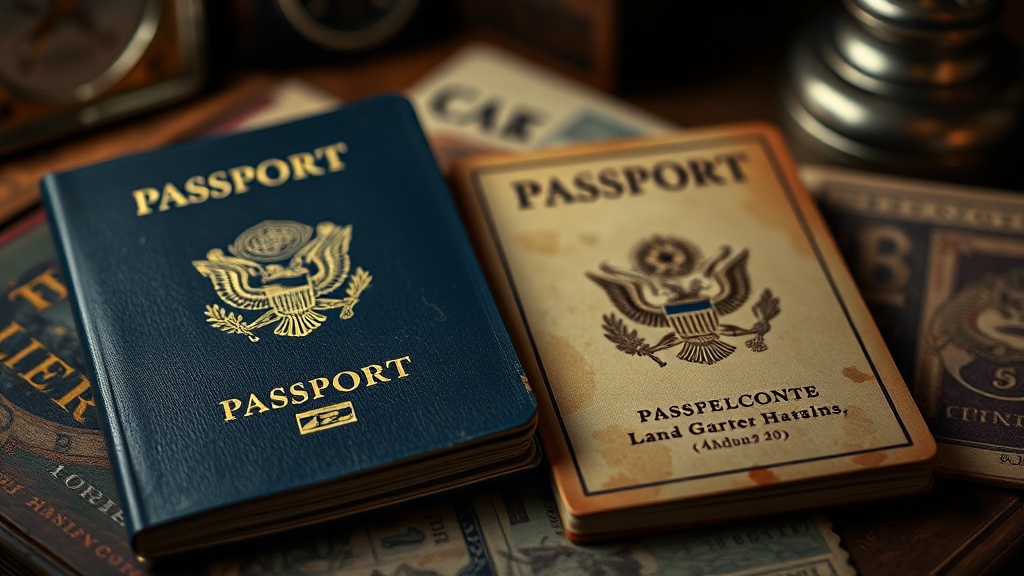
The Collector's Guide to Vintage Passports: History, Value & Preservation

What You'll Learn About Collecting Vintage Passports
This guide covers everything needed to start or expand a vintage passport collection. You'll discover how to identify valuable specimens, understand the factors that drive prices at auction, and preserve fragile documents for decades. Whether you've stumbled upon a family heirloom or you're hunting for that elusive 1920s League of Nations refugee passport, the information here will save you from costly mistakes and help you build a collection worth showing off.
What Makes a Vintage Passport Valuable?
The most valuable vintage passports typically combine historical significance, rarity, condition, and provenance. Age alone doesn't guarantee worth—a common 1950s tourist passport might fetch $30 while a rare World War I diplomatic passport with visas from multiple countries could command $2,000 or more.
Several factors determine what collectors actually pay:
- Historical significance: Passports issued during major events (wars, political transitions, refugee crises) carry premium prices
- Rarity: Short-lived governments, unusual issuing authorities, or limited print runs drive scarcity
- Condition: Crisp documents with intact covers, legible stamps, and no water damage outshine tattered specimens
- Visual appeal: Elaborate engravings, exotic visa stamps, and distinctive typography attract buyers
- Provenance: Documents linked to notable individuals or families add considerable value
The catch? Condition is often the dealbreaker. A pristine 1930s German passport might sell for $400 at eBay auctions, while the same document with torn pages and faded ink struggles to reach $75. Collectors pay for eye candy—documents that look impressive displayed in archival albums or framed collections.
Passport Types That Command Premium Prices
Certain categories consistently outperform the broader market. Diplomatic passports from any era remain highly sought after due to limited issuance and the prestige associated with them. Refugee and stateless passports from the interwar period—particularly Nansen passports—attract serious collectors interested in social history.
Here's the thing about early 20th-century documents: they're disappearing. Museums and institutional archives have acquired many significant collections, leaving fewer exceptional pieces available on the open market. That scarcity pushes prices upward for the finest specimens that do surface.
| Passport Type | Typical Price Range | What Drives Value |
|---|---|---|
| 19th Century (pre-1900) | $200 - $1,500+ | Rarity, elaborate design, historical period |
| WWI Military/Diplomatic | $150 - $800 | Historical significance, limited issuance |
| 1920s-30s Nansen Refugee | $300 - $2,000+ | Scarcity, humanitarian historical importance |
| WWII Era (1939-1945) | $100 - $600 | War documentation, occupation visas |
| Cold War Diplomatic | $150 - $500 | Political significance, limited access |
| 1950s-70s Standard | $25 - $150 | Condition, unusual destinations, artwork |
Where Can You Buy Authentic Vintage Passports?
Authentic vintage passports surface through specialized dealers, auction houses, estate sales, online marketplaces, and collector networks. Each source carries different risks and rewards—knowing where to look (and what to avoid) separates successful collectors from those who overpay for damaged or fake documents.
Specialized dealers offer the safest entry point. Established sellers like The Manuscript Society members or passport specialists on eBay with thousands of positive ratings provide authenticity guarantees and detailed condition reports. You'll pay a premium—sometimes 20-30% above market—but that insurance matters when you're spending serious money.
Auction houses deliver the best selection for mid-to-high-end pieces. Heritage Auctions, Swann Auction Galleries, and international houses like Christie's occasionally feature passport collections in their manuscript or historical document sales. The competitive bidding environment can drive prices up, but patient collectors often snag deals on lots with less dramatic presentation.
Estate sales and flea markets represent the wild west of passport collecting. You'll find bargains here—family document lots sold by heirs who don't recognize what they're holding. That said, condition problems run rampant. Passports stored in damp basements or exposed to sunlight show the damage, and sellers rarely offer returns.
Worth noting: Online marketplaces require extra scrutiny. eBay hosts legitimate sellers alongside questionable operators. Look for sellers with extensive feedback specifically in historical documents, detailed photographs showing covers, interior pages, and any damage, and clear return policies. If a deal seems too good—like a pristine 19th-century passport for $50—it probably involves a reproduction or outright forgery.
Red Flags to Avoid
The forgery market for vintage passports remains relatively small compared to coins or stamps, but reproductions exist. Modern laser printers can produce convincing facsimiles of old documents. Watch for:
- Documents that look "too perfect"—age should show somewhere
- Ink that appears uniform and modern under magnification
- Paper that feels wrong—old passports used cotton rag stock, not modern wood pulp
- Visa stamps with identical ink density (genuine stamps vary)
- Sellers who won't provide additional photographs or provenance information
How Should You Store and Preserve Old Passports?
Proper storage requires archival-quality materials, climate control, gentle handling, and protection from light exposure. Vintage passports are essentially paper artifacts—susceptible to acid migration, humidity damage, UV fading, and physical stress. The right preservation approach maintains both condition and value.
Start with the materials touching your documents. Standard plastic sleeves and albums often contain PVC or other chemicals that degrade paper over time. Instead, invest in archival polyester sleeves (Mylar D or equivalent) from suppliers like Light Impressions or Gaylord Archival. These inert sleeves cost more—expect $15-25 for a package of 50—but they won't yellow, crack, or off-gas destructive chemicals.
Storage environment matters enormously. Ideal conditions hover around 65°F with 35% relative humidity. Basements and attics? Disastrous. Temperature fluctuations cause paper expansion and contraction; humidity spikes invite mold and foxing (those brown spots that plague old documents). A closet in your main living space works better than specialized storage areas that aren't climate-controlled.
Light exposure—particularly ultraviolet light—fades inks and embrittles paper. Don't display passports in direct sunlight or under harsh halogen bulbs. If you're showing off prized pieces, use UV-filtering glass in frames and rotate displayed items every few months. The rest of your collection belongs in archival boxes, stored flat to prevent spine stress on bound documents.
Handling Best Practices
Clean hands aren't enough—oils from skin transfer even after washing. Handle passports with clean cotton gloves or, better yet, support documents on a book cradle rather than touching them directly. Never force open bindings that resist; gentle pressure over time (weighted with archival-quality materials) can relax tight spines.
That said, some wear tells a story. A passport heavily stamped with visas from exotic locations carries historical evidence that cleaning or restoration might diminish. Conservation work should always be reversible and performed by professionals—never attempt DIY repairs with tape or glue. The American Institute for Conservation maintains a directory of qualified conservators who specialize in paper artifacts.
Building a Collection With Purpose
Successful collectors usually specialize rather than accumulating randomly. Geographic focus—perhaps passports from a specific country or region—creates coherent collections that tell meaningful stories. Thematic collecting works too: passports showing specific visa types, documents from particular decades, or specimens featuring unusual designs.
Documentation transforms accumulation into scholarship. Record provenance information, research the individuals named in your passports (when possible), and photograph your collection for insurance purposes. Some collectors maintain spreadsheets tracking acquisition dates, prices, condition notes, and research findings. This habit proves invaluable when evaluating future purchases or preparing for eventual sale.
The passport collecting community—though smaller than stamp or coin circles—offers tremendous resources. Online forums, specialized Facebook groups, and the annual gatherings of the Ephemera Society provide opportunities to learn from experienced collectors, discover new sources, and authenticate questionable pieces. Most experienced collectors remember being beginners and willingly share knowledge.
Start modestly. A $50 passport with interesting visas teaches you more about handling, storage, and documentation than reading ever will. As your eye develops, you'll recognize quality and value faster. The documents you pass over today—common specimens in decent condition—may become the trading stock that funds your acquisition of that exceptional piece you've been hunting for years.