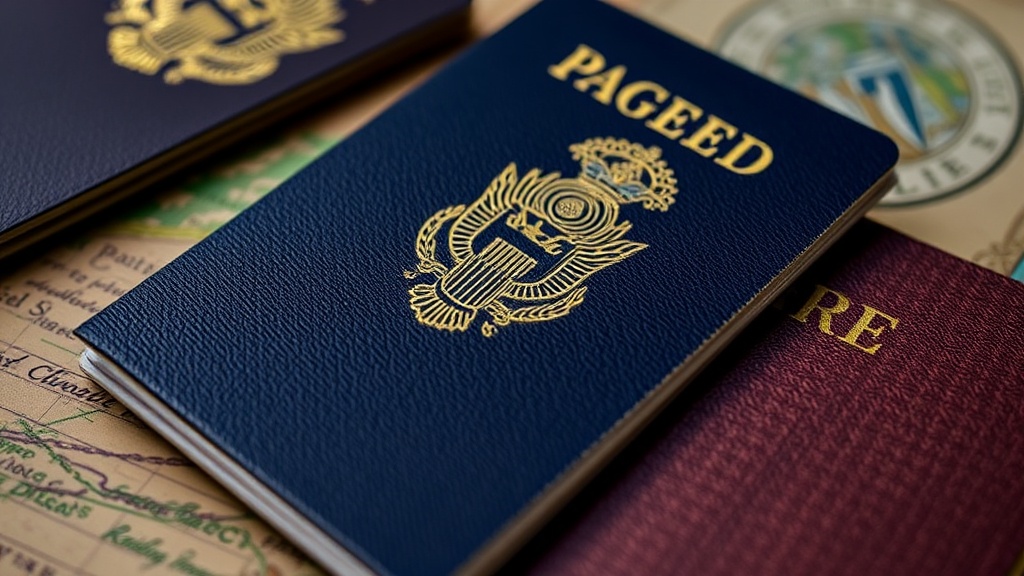
The Evolution of Passport Cover Materials and Textures

Many collectors assume that the durability of a vintage passport is solely dependent on the quality of the paper inside. This is a mistake. While the internal pages hold the history, the cover material dictates how well that history survives decades of handling, storage, and environmental exposure. We're looking at the shift from heavy-duty organic materials to modern synthetic blends and how these changes affect the collectibility and preservation of vintage documents. Understanding these textures helps you identify the era of a document and how to treat it properly.
Why do vintage passport covers feel different than modern ones?
Vintage passport covers often feel significantly heavier and more textured because they relied on thicker, organic materials like heavy-duty leather or high-density buckram. Modern passports tend to favor thinner, more uniform synthetic materials designed for weight reduction and high-speed machine scanning. If you pick up a mid-century document, you'll likely notice a distinct "tooth" or grain that isn't present in today's sleek, laminated versions.
The transition from organic to synthetic wasn't just about cost; it was about the evolution of travel technology. Early 20th-century travelers carried documents that were meant to last a lifetime of heavy use. These covers often featured thick, vegetable-tanned leather or heavy linen-wrapped boards. They were built for a world where a passport was a rare, precious object, not a disposable travel accessory.
The texture of these older covers often tells a story of the region they came from. For instance, a vintage British or Commonwealth passport might feature a very stiff, dark blue cloth-bound cover with a deep grain. Compare that to the smoother, more pliable textures of mid-century American or European documents. It’s a small detail, but it's what makes the tactile experience of collecting so rewarding.
One thing to watch out for is "shelf wear" on these textured surfaces. Because organic materials react to humidity, a leather-bound cover might develop a patina or even crack if it wasn't stored correctly. This is why I often discuss restoring a damaged vintage passport—the material itself is often the first thing to show age.
Common Materials Through the Decades
To understand the evolution, it helps to see the breakdown of what was used when. I've put together a quick reference for the materials you'll likely encounter in your collection.
| Era | Primary Material | Typical Texture | Common Characteristics |
|---|---|---|---|
| Pre-1940s | Heavy Leather / Thick Cloth | Rough, Grainy, Stiff | High durability, organic scents, heavy weight. |
| 1950s - 1970s | Buckram / Linen-Wrapped Card | Textured, Woven, Matte | Medium flexibility, distinct fabric feel. |
| 1980s - 2000s | Synthetic Leather / Poly-Coated | Smooth, Uniform | Water-resistant, standard weight, low texture. |
| Modern Era | Polycarbonate / High-Tech Laminates | Slick, Non-porous | Ultra-durable, optimized for digital scanning. |
How does material choice affect long-term preservation?
Material choice directly impacts how much a document will degrade over time due to chemical breakdown or environmental factors. Organic materials like leather and linen are susceptible to acidity and moisture, whereas modern synthetic covers are much more stable but can suffer from "delamination" where the layers peel apart.
If you're holding a leather-bound passport from the 1930s, you're dealing with an object that is essentially "alive." It reacts to the oils in your hands. If you touch a vintage cover with damp hands, you're not just risking a stain—you're potentially altering the pH of the material. This is why I'm so picky about how I handle my pieces. A little bit of moisture can do a lot of damage to a high-quality leather cover.
The synthetic-era passports (roughly the late 1980s) introduced a new problem: the "plastic smell." Many collectors find that these documents have a distinct, chemical odor that can linger in a storage box. While these materials are more resistant to mold, they can sometimes become brittle if the plasticizers leach out over decades. It's a different kind of aging than the gradual softening of a leather cover.
It's worth noting that the material of the cover can also affect the pages inside. A heavy, stiff cover provides a "shield" for the internal pages, but if the cover is too tight, it can cause the pages to bow or even crack when the document is opened. If you've ever struggled with stuck vintage passport pages, check the cover rigidity first. A rigid, unyielding cover is often the culprit.
The Impact of Humidity on Cover Texture
Humidity is the enemy of texture. For the vintage collectors, this is a constant battle. Here is how different materials respond to the environment:
- Leather: Can dry out and crack (desiccation) or absorb moisture and become soft/moldy.
- Buckram/Linen: Highly susceptible to "foxing" or spotting if the cloth is not high-grade.
- Synthetic/Polycarbonate: Generally stable, but can become "tacky" or sticky in high heat.
What are the best ways to clean vintage passport covers?
Cleaning a vintage cover depends entirely on whether the material is organic or synthetic. You cannot use the same method for a 1920s leather-bound document that you would use for a 1990s plastic-coated one. Using the wrong cleaner is the fastest way to ruin a collectible's value.
For leather-based covers, you want to be incredibly gentle. Avoid anything with harsh chemicals or excessive water. A very slightly damp, soft microfiber cloth is often enough for surface dust. If there's deep-seated grime, professional-grade leather conditioners (the kind used for books, not shoes!) might be necessary. But be careful—over-conditioning can make the cover too soft, losing its structural integrity.
If you're dealing with a cloth-covered-board passport, the approach is different. You're often looking at removing surface dust or light staining. A soft-bristled brush is your best friend here. I've found that a clean, dry paintbrush is great for getting dust out of the deep grain of a linen-wrapped cover without scratching the surface. If you're worried about small imperfections, you might want to look into cleaning micro-scratches to see if it's even worth the risk.
For the more modern, synthetic-style covers, you have a bit more leeway, but don't get cocky. A simple wipe with a damp cloth usually does the trick. However, avoid using alcohol-based cleaners on these. Alcohol can actually melt certain types of synthetic coatings or leave permanent streaks that make the document look "cloudy."
A good rule of thumb? Test a tiny, inconspicuous area first. If you're looking at a corner of the back cover that isn't visible when the book is closed, try your cleaning method there. If the color changes or the texture feels different, stop immediately. It's better to have a slightly dirty, authentic-looking document than a "clean" one that has been chemically stripped of its character.
The evolution of these materials is a fascinating look at how we prioritize durability versus cost. The transition from the heavy, tactile, and somewhat temperamental organic covers to the uniform, predictable, and lightweight-synthetic ones marks a shift in how we perceive the "importance" of the document itself. To a collector, the "imperfections" of an old leather or cloth cover aren't flaws—they're the very things that give the object its soul.